Maritime Heritage · Menorca

Port of Mahón
five kilometres of history between the sea and the stone

One of the largest natural harbours in the world, told the way it was written: from the water. A journey through its islands, fortresses and legends, from the head of the harbour to the mouth.

A coveted stronghold for centuries

One of the Largest Natural Harbours in the World

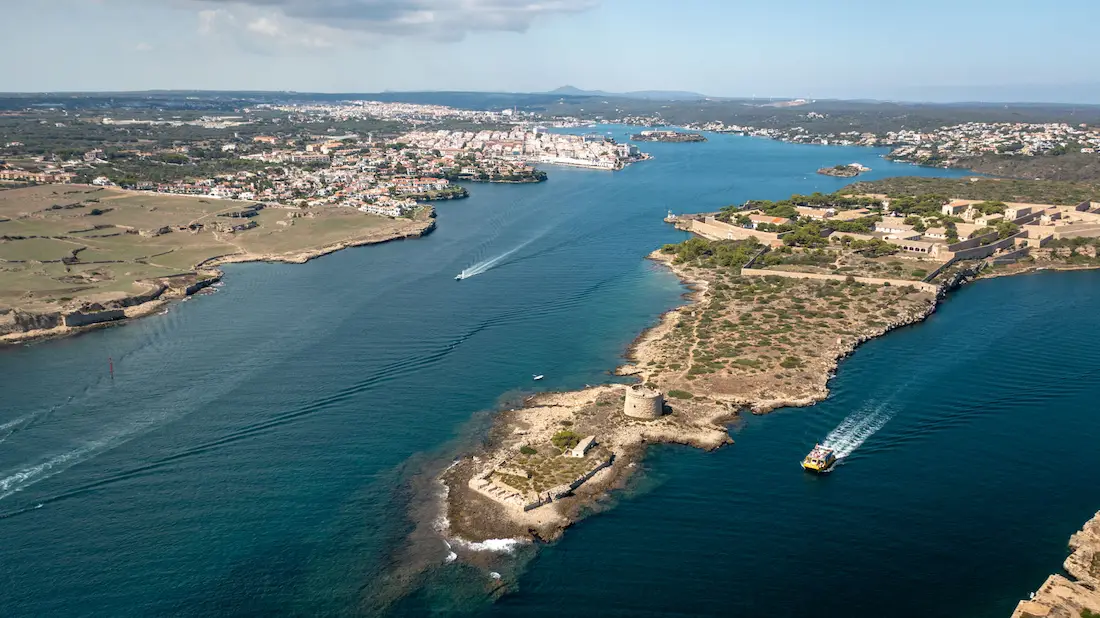
The Port of Mahón is an extraordinary natural inlet: nearly five kilometres of deep, sheltered water reaching into Menorca from the Mediterranean. Its ability to shelter entire fleets from the storms made it, for centuries, one of the strategic keys to the western Mediterranean.

It is no coincidence that the British, French and Spanish fought over Menorca throughout the 18th century: what they really wanted was this harbour. The British moved the island's capital here, built hospitals and fortresses, and left a mark still felt today in the gin, the sash windows and the very layout of the port. Exploring it under sail is the truest way to read that history, because it is exactly where it was written.

The mouth of the Port of Mahón opening onto the Mediterranean, the natural entrance to Menorca's harbour
Stop by stop

What to See in the Port of Mahón, from the Head to the Mouth

We set off from the head of the harbour, beside the city of Maó, and discover each landmark as we sail towards the open sea. These are the stops we'll see on board.

01

The head of the harbour and the city of Maó

The journey begins in the most sheltered part, beside the capital of Menorca. The city of Maó grew up facing the water, perched on the cliffs of the harbour, with its quays, its stairways and the old merchants' warehouses. From the sea you understand at a glance why the island's life always revolved around this basin: this is where the goods, the news and the armies arrived.
02

King's Island (Illa del Rei)

It owes its name to King Alfonso III of Aragon, who landed here in 1287 to conquer Menorca. But its fame came with the British: in 1711 they built a naval hospital on the island —the first of its kind in the Mediterranean— to care for the crews of the Royal Navy. So many sailors fell ill and died within its walls that the British nicknamed it “Bloody Island”.

Today, rescued from ruin by an army of volunteers, King's Island has come back to life: it preserves a 6th-century early-Christian basilica with exceptional mosaics and, since 2021, hosts a gallery of the prestigious international art house Hauser & Wirth. Few islands pack so much history into so little space.

03

Illa Plana and the quarantine islands

Nearby rises the Illa Plana, a small island that for centuries served as the harbour's first sanitary filter. Before the Lazaretto existed, ships suspected of carrying disease were isolated here. It was the antechamber of quarantine, a reminder that the Port of Mahón was also, for a long time, a frontier against the epidemics of the Mediterranean.

04

The Lazaretto of Mahón

It is probably the most impressive monument in the harbour. The Lazaretto is a colossal walled quarantine station, built between 1793 and 1817 on an island, to isolate crews and goods that might be carrying the plague, yellow fever or cholera. Its walls, several metres high, kept those in isolation apart from the rest of the world: no one came in or out without serving their confinement. It operated until the early 20th century and, seen from the sea, it keeps all its power intact.

05

Golden Farm and the Nelson legend

On the northern shore stands an elegant reddish colonial house known as Golden Farm (Sant Antoni). Legend has it that Admiral Nelson stayed here during his time in Menorca. Few historians take it as certain, but the story has remained forever tied to the most photographed house in the Port of Mahón.

06

Cala Teulera, the anchorage in the fortress's shadow

Almost at the end of the harbour, a sheltered cove opens to one side: Cala Teulera, a calm anchorage protected by the bulk of La Mola. It is one of those corners where the harbour invites you to stop, drop anchor and look back over the whole way you've come before facing the open sea.

07

La Mola, the Fortress of Isabel II

Guarding the entrance rises La Mola, the Fortress of Isabel II, a colossal military work built between 1850 and 1875 to make the harbour an impregnable stronghold. Kilometres of walls, tunnels and gun batteries carved into the rock show just how prized this enclave was. Seen from the water, its sheer scale is overwhelming.

08

The mouth, the gateway to the Mediterranean

And finally, the mouth: the narrow opening through which the Port of Mahón meets the Mediterranean. It marks the boundary between the calm waters of the inlet and the open sea, and it is the point where you understand, at a single glance, why this harbour was so coveted: a single entrance, easy to defend, that for centuries guarded one of the safest anchorages in the Mediterranean. Crossing the mouth under sail, with the lighthouse on one side and the fortress on the other, is the perfect finale to the journey.

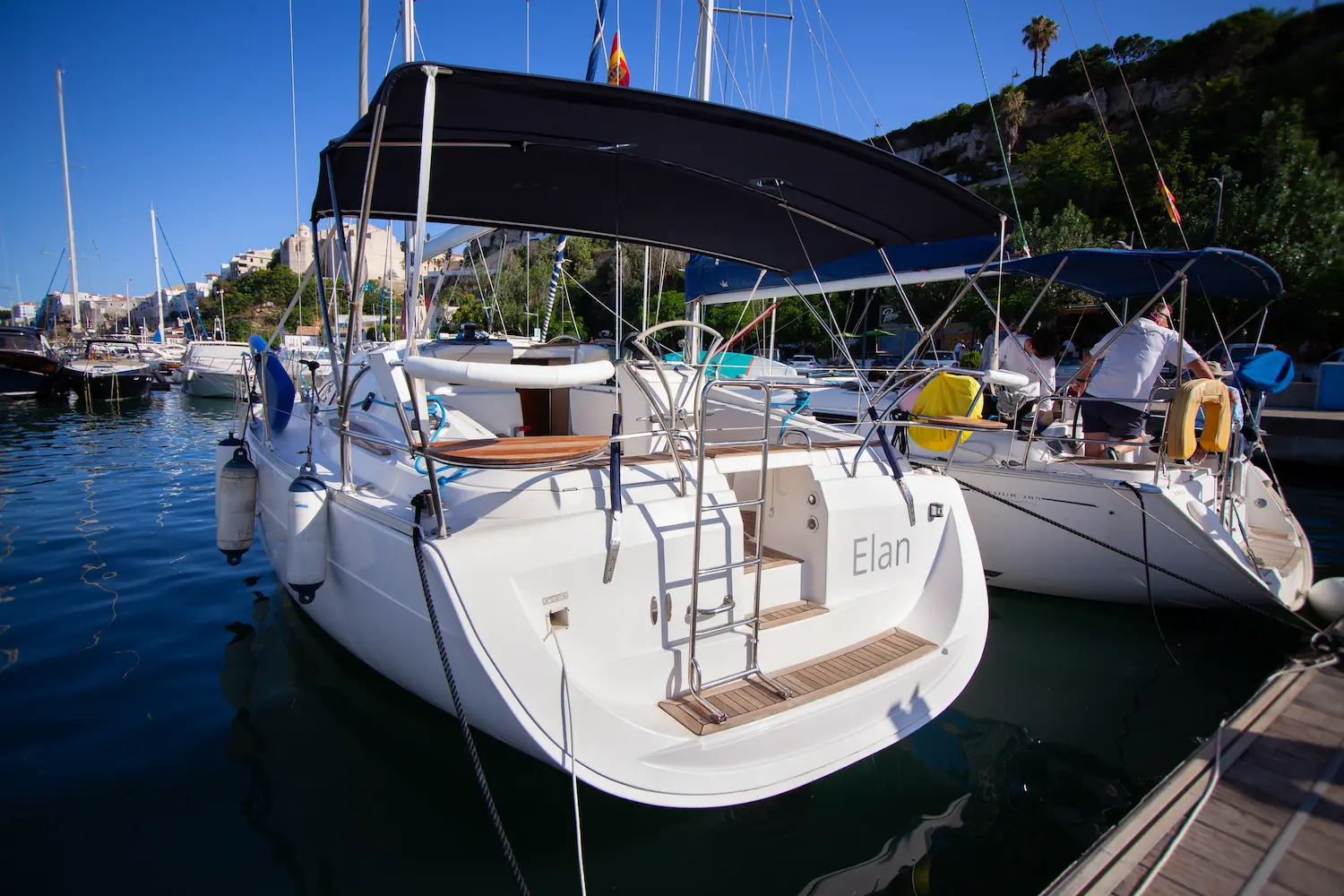
The Elan sailboat sailing across the Port of Mahón during a private excursion in Menorca
From the map to the water

Explore the Port of Mahón by Sailboat

All this history is best seen under sail, in silence and unhurried. Our two-hour sailing trip around the Port of Mahón follows exactly this route —from the city of Maó to the mouth— while you enjoy a glass of cava on board. A private outing for up to 8 people, at a fixed price all year round.

Any questions? Chat with us