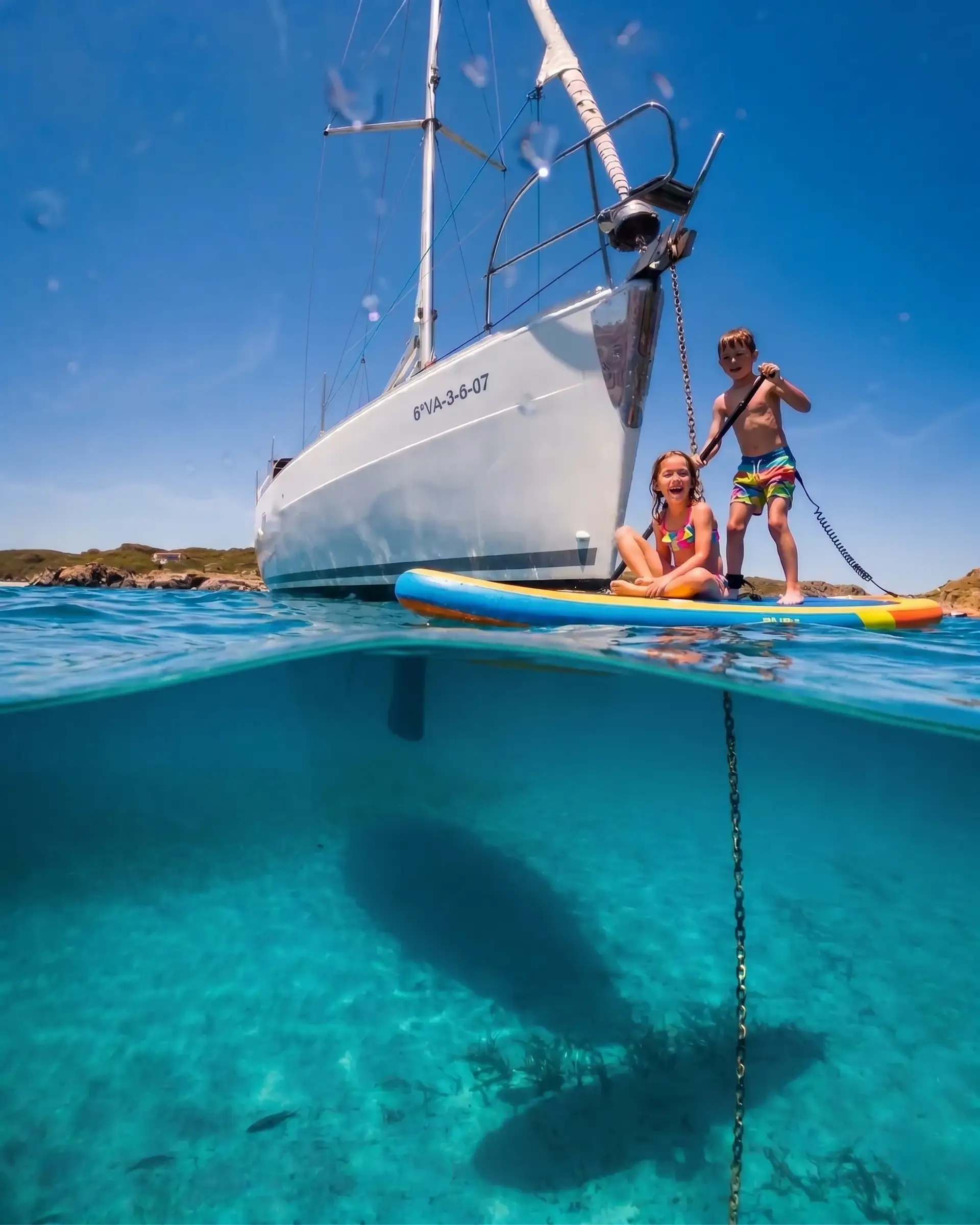
If you've searched for "best coves in Menorca", you already know the story: Macarella, Macarelleta, Cala Mitjana… postcard photos, and underneath, the small print no one tells you about. Car parks that fill up by mid-morning in summer, half-hour walks under the sun and, when you arrive, one towel stuck to the next. Menorca is a Biosphere Reserve and its coastline is —rightly— heavily protected: in high season, reaching the famous coves by land has become a bit of an odyssey.
But there is another Menorca. One that doesn't appear in the rankings because, quite simply, you can't get to it by car. Islands with no road, caves that open at water level, anchorages where the only sound is your own laughter as you jump off the bow. This is the honest guide to those spots, written by someone who anchors in them every week on our private sailing trips around Menorca.
1. Illa d'en Colom: the island with no cars, no beach bars and no rush
Off Es Grau, within the s'Albufera des Grau Natural Park, Illa d'en Colom is the largest island off the Menorcan coast… and it has not a single access by land. Its two sandy beaches, Es Tamarells and s'Arenal d'en Moro, only ever see visitors who arrive by sea. We've dedicated a full guide to the north, from Illa d'en Colom to the Favàritx lighthouse — with drone video included.
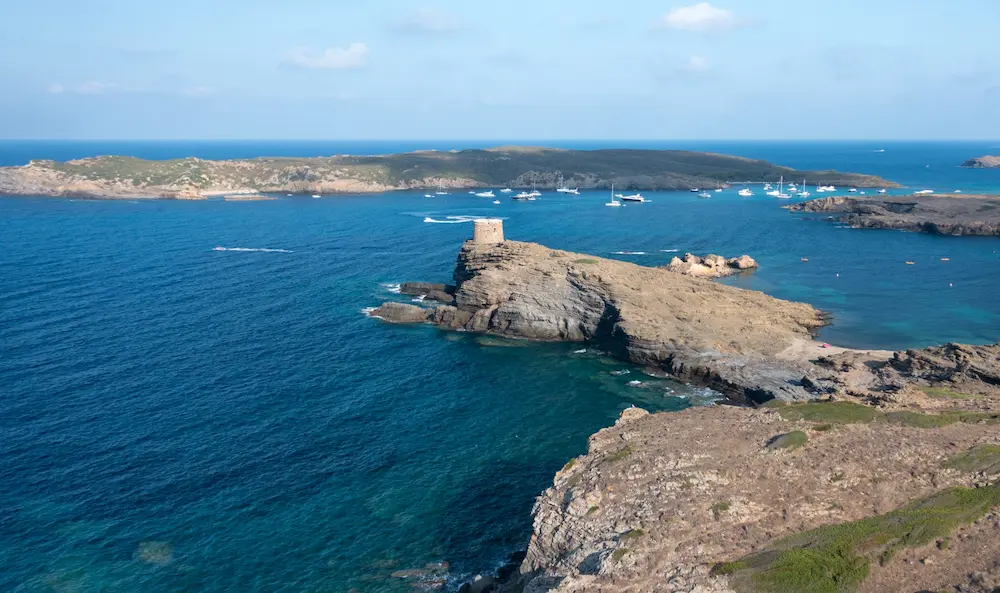
Why do we love anchoring here? Shallow water, a clear sandy bottom that turns the sea turquoise and a natural shelter that keeps the boat as still as a swimming pool. It's our favourite stop when we sail the north route and, by far, the best option if you're coming with children: they can swim to shore, paddleboard and snorkel without the boat moving an inch.
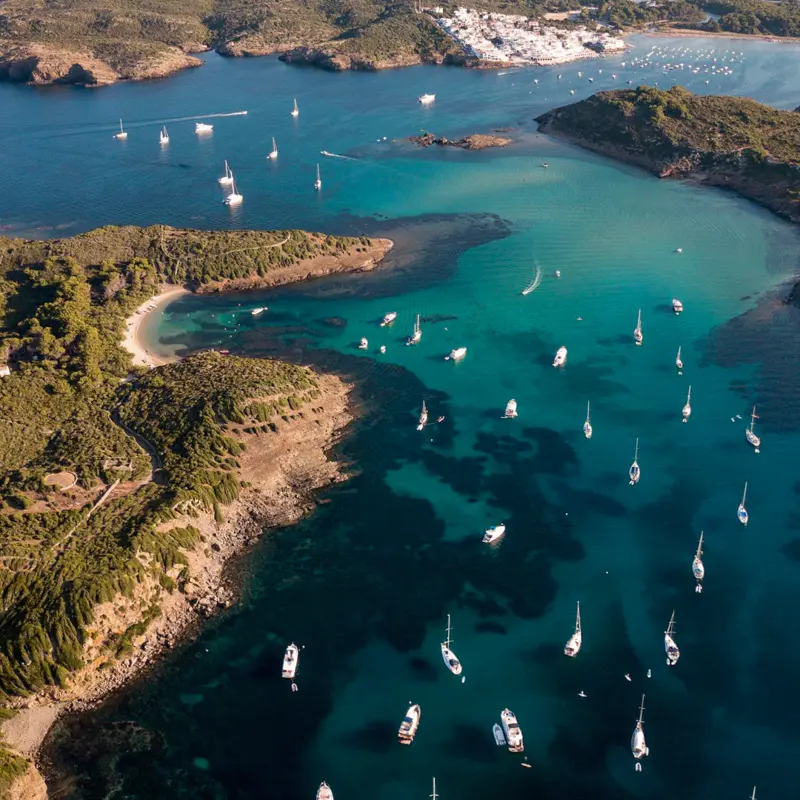
2. Isla del Aire: a lighthouse, black lizards and no one else
At the south-eastern tip, off Punta Prima, Isla del Aire rises with its 1860 lighthouse. There is no regular transport from land: either you arrive by sea, or you watch it from the beach. It is famous for its black sargantanes —an endemic lizard found nowhere else in the world— and for waters that seem lit from below.
Sailing around the islet and anchoring nearby, when the weather allows, is one of the star moments of our south route. And if you happen to catch the last hour of the afternoon, the golden light over the lighthouse alone justifies the trip to Menorca. (If you're into sunsets, we have a sunset sailing trip designed for exactly that.) We tell you more about both islands in our guide to Isla del Aire and Illa d'en Colom.
3. The Punta Prima cave and the south-east cliffs
Between Alcaufar and Punta Prima, the low limestone coast hides caves and arches that only open towards the sea. From land they are invisible: you walk right over them without knowing they exist. From the deck of a sailboat, however, you see the mouth of the Punta Prima cave open at water level, and with a calm sea you can take the paddleboard right up to the entrance.
This stretch —Alcaufar, the cave, Binibèquer, ses Olles de Binisafúller, es Caló Blanc— is a string of micro-coves and natural rock pools where there's rarely room for more than one boat. That's why you won't find them in the beach guides: they aren't beaches. They are corners of the sea, and they are enjoyed from the sea.
4. The mouth of Mahón harbour: es Clot de la Mola and sa Mesquida from their hidden side
Leaving the Port of Mahón —one of the largest natural harbours in the world— the coast holds surprises just ten minutes' sail away. Es Clot de la Mola, at the foot of the imposing La Mola fortress, is a shelter of deep, clear water tucked beneath the cliffs: a spectacular anchorage no one reaches on foot.
A little further north, sa Mesquida and cala Rambla show from the sea a face the visitor on foot never sees: the British defence tower outlined against the rocks and side coves with no access by path. It's the perfect appetiser of the north route before heading for Illa d'en Colom.
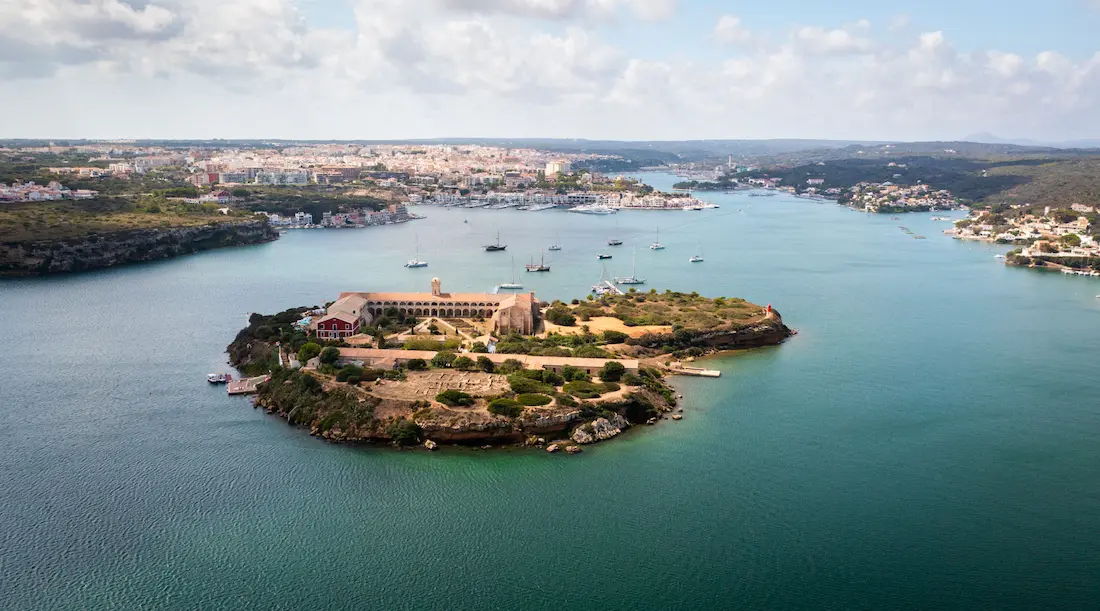
5. Cala Presili and the Favàritx coast: you can walk there… but it's not the same
Let's be honest, because that's what this guide is about: you can reach Cala Presili on foot from the Favàritx lighthouse. That said, in high summer car access to the lighthouse area is restricted, so you have to combine a shuttle and a walk with everything on your back. The alternative? Arrive by sailing, anchor off the unspoilt beach with the lighthouse behind it and hop in for a swim or a paddle. Same cove, opposite experience.
This is, in fact, the summary of the whole Menorcan coast: even in the "accessible" coves, the boat turns logistics into freedom. No car-park timetables, no carrying cool boxes along paths, no choosing between shade or a spot. The cool box, the swim and the shade all come with you.
North or south? The secret is the Tramontana
The question we get asked most. The short answer: the wind decides it, and that's good news. Menorca has two opposite, complementary coasts: when the Tramontana blows (the north wind), the south coast stays sheltered and calm; when the wind comes from the south, it's the north coast —the wildest and least built-up— that turns into a mirror.
That's why we never promise a fixed route weeks ahead: we check the forecast with you the day before and choose the good coast. So whether it's blowing a Tramontana or dead calm, you always sail the best version of the island. You'll find the stops for both routes on our sailing routes in Menorca page, and if you're still deciding on dates, take a look at the best time to sail in Menorca.
Practical tips before you set sail
- Bring little: swimsuit, towel, sun cream (ideally reef-friendly), a cap and sunglasses. The snorkel gear and the paddleboard are already on board.
- Eat a light breakfast if you're worried about seasickness: we sail at a gentle pace with long stops in sheltered coves, but a light stomach always helps.
- Children and grandparents, welcome: three-generation families have sailed with us. There are life jackets and a skipper keeping an eye on everything. If you're coming with little ones, see our guide to sailing with kids in Menorca.
- Book ahead in July and August: we work with a single sailboat —up to 12 people— and high-season dates fly.
More questions about what to bring, seasickness or how booking works? We answer them all in our frequently asked questions.
Frequently asked questions about visiting the coves by boat
Can you visit Isla del Aire on your own?
You can only reach it by sea: there is no regular transport service from land. The usual way to see it is aboard a private boat that anchors nearby, as we do on our south-coast trips when the weather allows.
Which cove in Menorca is best for going by boat with children?
The anchorages next to Illa d'en Colom are among the calmest on the island: shallow, crystal-clear, sheltered water, perfect for children to swim and paddleboard in complete safety.
Is it better to sail the north or the south coast of Menorca?
It depends on the day's wind. With the Tramontana (north wind) the south coast sails better, as it is more sheltered; with a south wind, the north coast turns calm and shows off its wildest scenery. That's why we decide the route with the forecast in hand, the day before the trip.
Stop reading about coves. Anchor in them.
A private sailboat for your group (up to 12 people), skipper included and departure from the Port of Mahón. From €450 for the whole boat.
About the author: Sergi is the owner and host of Elan Menorca. He has sailed the Menorcan coast since 2020 aboard his Elan Impression 384, based in the Port of Mahón.